
How to Hold Drum Sticks: Master Grip Techniques & Fulcrum
Master how to hold drum sticks with our ultimate guide on grip techniques. Learn German, French, and Traditional grips to boost speed and stop wrist pain.
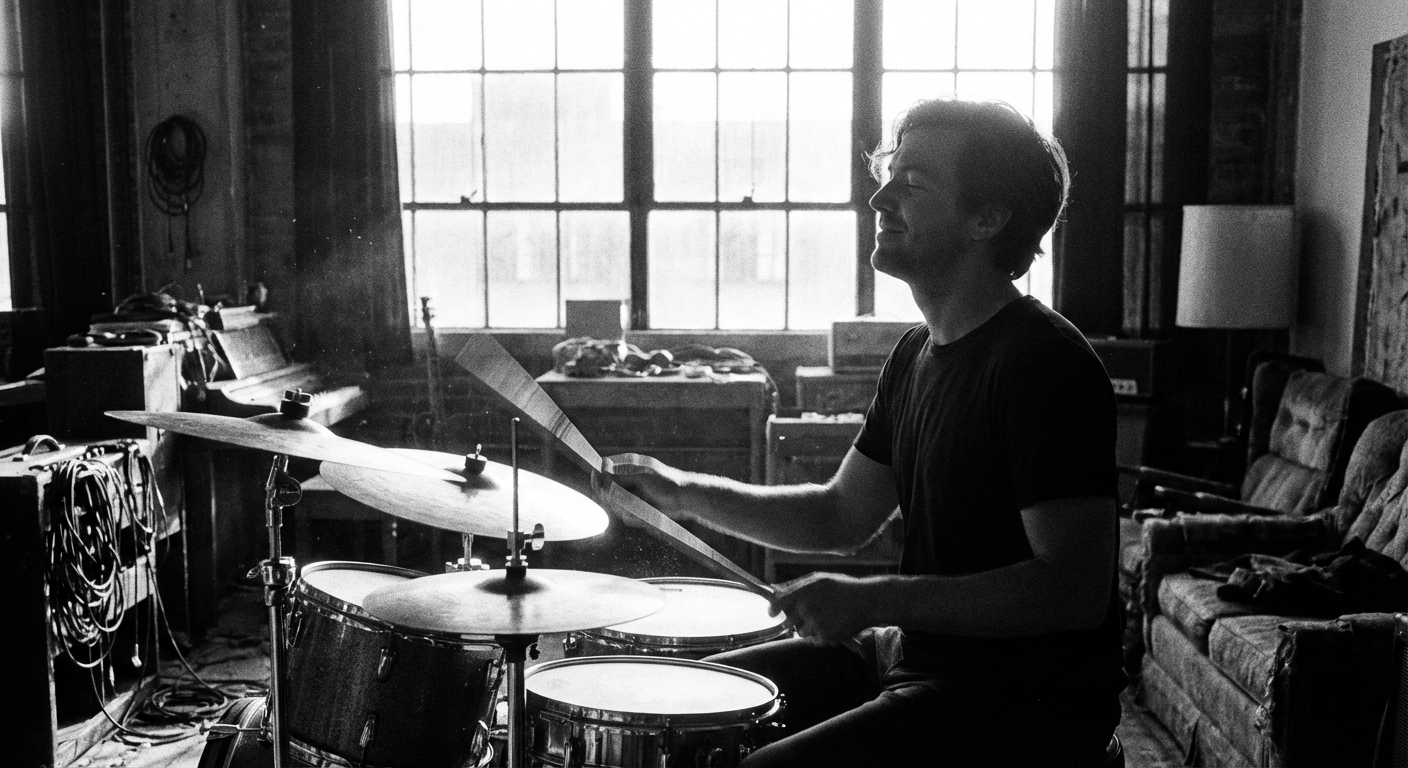
How to Hold Drum Sticks: Master Grip Techniques & Fulcrum
You are hitting a wall. Your speed has plateaued, your wrists ache after twenty minutes of playing, or perhaps you just can’t get that consistent, punchy sound you hear on your favorite records. You watch your heroes play with effortless grace, while you feel like you are wrestling an alligator every time you sit behind the kit.
I have seen this happen to thousands of students over the last 20 years. The problem usually isn't a lack of talent, rhythm, or dedication. The problem is physics.
The drum stick is not just a piece of wood; it is a lever. Your hand is the machine that operates that lever. If you fight the laws of physics, you will lose every time. But if you learn to work with the rebound and the natural anatomy of your body, drumming becomes effortless.
In this guide, we are going to strip away the "feeling" and look at the mechanics of how to hold drum sticks. We will cover exactly where your fulcrum should be, the specific use-cases for German vs. French grips, the debate between Matched vs. Traditional, and how to stop hurting yourself so you can play for a lifetime.
The Physics of Grip: Why the Fulcrum is King
Before we talk about styles, we must talk about the lever. The most critical concept in drumming technique is the Fulcrum. Without a proper fulcrum, you are just flailing wood at plastic, and the result will be a dull sound and sore hands.
In physics, a fulcrum is the point on which a beam pivots. On a drum stick, this is the specific spot where your thumb and index finger (or middle finger) connect. This point dictates the balance of the stick and how much "rebound"—or energy return—you get from the drumhead.
Think of it like a playground seesaw. If you sit right in the middle, it balances. If you sit on the very edge, it slams down.
- Holding too far back: If you hold the stick at the very bottom (the butt end), you have zero rebound. You have to use excessive muscle to lift the stick back up after every stroke. This is the fastest road to Tendonitis.
- Holding too far forward: If you hold it too close to the tip, you have no power and the stick feels dead.
How to Find Your Fulcrum: The Balance Point Method
You need to find the "sweet spot" where the stick does the work for you. Here is the step-by-step method I teach to all beginners:
- Divide the stick: Visually divide your drumstick into three equal parts. Your fulcrum is generally located at the line between the bottom third and the middle third.
- The Balance Test: Place the stick on your index finger alone, like a seesaw. Move it back and forth until you find the exact point where it balances perfectly horizontally.
- The Shift: From that perfect balance point, slide your finger back toward the butt of the stick about half an inch. The tip should now feel slightly heavier than the back. This "front-heaviness" is crucial for power.
- The Pinch: Place the pad of your thumb directly opposite your index finger at this spot.
This is your pivot point. When you throw the stick down, the weight of the tip carries it into the drum, and the natural elasticity of the head throws it back up. Your job is simply to allow that motion to happen.
Tip: Many drummers mark this spot on their sticks with a sharpie or a piece of tape when they are first learning.
Common Mistake: Many beginners squeeze this point like they are holding a hammer. Do not do this. Imagine you are holding a small bird; you want to prevent it from flying away, but you do not want to crush it. The stick must be free to rotate within your hand.
Matched Grip Variations: A Toolbelt for Every Genre
A major source of confusion in drum stick grip techniques is the idea that "Matched Grip" is a single technique. It is not. Matched grip (where both hands hold the stick the same way) is actually a category containing three distinct variations.
Think of these variations as tools in a toolbelt. You wouldn't use a sledgehammer to hang a picture frame, and you wouldn't use a screwdriver to demolish a wall. You need to know when to switch between them to adapt to the music.
1. German Grip: How to Generate Maximum Power
The German grip is characterized by your palms facing down toward the drumhead, like you are typing on a keyboard or placing your hands flat on a table.
- The Mechanics: In this position, your wrist has the widest range of vertical motion. You are utilizing the large muscles of the forearm. The motion is similar to knocking on a door or waving goodbye.
- When to use it: This is your heavy hitter. Use German grip when you need power, volume, and solid backbeats. It is ideal for rock, heavy metal, and loud pop drumming. It allows you to access the "Moller" whipping motion easily.
- How to execute:
- Find your fulcrum.
- Rotate your forearm so the palm is flat (parallel to the floor).
- Your elbows should stick out slightly away from your ribs to allow the wrist to move freely.
- The movement comes entirely from the wrist.
2. French Grip: The Secret to Finesse and Speed
The French grip is the opposite. Here, your thumbs face the ceiling, and your palms face each other, as if you are shaking someone's hand.
- The Mechanics: This position restricts wrist movement (try bending your wrist up and down in a handshake position—it locks up). However, it perfectly positions your fingers underneath the stick. The stick moves by manipulating your fingers (opening and closing the hand) rather than bending the wrist.
- When to use it: Use this for speed, finesse, and Ride cymbal patterns. It is common in jazz and fusion where intricate ghost notes and fast tempos are required. It is also the go-to grip for playing Timpani.
- How to execute:
- Start in German grip.
- Rotate your wrists 90 degrees so thumbs are on top.
- Bring your elbows in closer to your ribs.
- Use your fingers to push and pull the stick against your palm.
3. American Grip: The Perfect All-Rounder
This is the "home base" for most drummers. It is a 45-degree angle—halfway between German and French.
- The Mechanics: Your knuckles form a 45-degree angle relative to the floor. This allows you to engage both the wrist for power and the fingers for speed.
- When to use it: This is the best all-around grip for general kit playing. It offers the best compromise of endurance, power, and control. If you are learning essential drumming techniques for beginners, this is the grip you should master first.
Pro Tip: Do not get stuck in one grip. Watch professional drummers; they shift fluidly between German and French grip depending on whether they are smashing a snare drum or playing a fast ride pattern.
Traditional Grip: Is It Right for You?
You will often see jazz legends like Buddy Rich or marching drummers using an asymmetrical grip where the left hand holds the stick underhand (palm up) while the right hand remains overhand. This is the Traditional Grip.
Should beginners learn matched or traditional grip?
If you are starting on a drum kit, I almost always recommend starting with Matched Grip. Traditional grip was invented for military drummers who had to sling a snare drum over their shoulder at a steep angle. The underhand grip was a bio-mechanical necessity to clear the rim of the drum.
On a flat drum set, Traditional grip is not biomechanically necessary, but it is stylistically valid. It offers a different "touch" and sensitivity, particularly for brushwork and jazz. However, it requires a completely different set of muscles (rotary forearm movement vs. linear wrist flexion).
- The Mechanics: The stick rests in the webbing between the thumb and index finger. The motion is a rotation of the forearm, similar to turning a doorknob.
- The Verdict: Master Matched grip first. It applies to all percussion instruments (xylophone, timpani, congas). Explore Traditional as a specialized skill later once your fundamentals are solid.
Troubleshooting: Why Do My Hands Hurt?
Pain is the body's way of telling you that your physics are wrong. If you are experiencing pain, stop immediately and assess your technique. Here are the three most common issues I see in students.
1. The "Death Grip" (Thumb Pain)
The Symptom: A sharp pain at the base of the thumb or in the fleshy part of the palm. The Cause: You are squeezing the fulcrum too hard. When you squeeze, you transfer the shock of the impact directly into the joint of your thumb rather than letting the stick absorb it. The Fix: Relax your thumb. There should be a visible gap between your thumb and index finger (often called the "window"). If that window is closed tight, you are squeezing. The stick should be able to be pulled out of your hand with a gentle tug.
2. The "Flying Stick" (Slipping)
The Symptom: Sticks constantly flying out of your hands across the room. The Cause: Beginners often panic when sticks slip and overcompensate by squeezing harder (leading to the thumb pain mentioned above). Sticks usually slip because the fulcrum has migrated back to the butt of the stick (where there is no balance), or your hands are sweaty. The Fix: Check your fulcrum location. If you are holding the stick at the very end, the centrifugal force will pull it out of your hand. Move up to the balance point. If sweat is the issue, use stick wax, but do not tighten your grip. Also, ensure you are using the right gear for your hand size; sometimes a switch from a 7A to a 5A can fix grip issues (check our guide to drum stick sizes for more).
3. Blisters and Calluses
The Symptom: Painful bubbles on the ring finger or inside of the index finger. The Cause: Friction. Friction happens when the stick moves against your skin rather than with it. The Fix: This usually happens when the back fingers (middle, ring, pinky) are rigid. These fingers should act as a soft cage, gently following the stick's movement. If they are stiff, the stick rubs against them with every stroke. Relax the back of the hand.
Essential Exercises: Building Your Grip Muscle Memory
Knowing the theory is one thing; programming your muscle memory is another. You need to build the relationship between your hand and the rebound. I highly recommend doing these exercises on a practice pad rather than a drum to hear the clarity of the strokes. (Don't have a routine yet? See how to practice with your drum pad for a full workout).
Exercise 1: The Floor Bounce
This is the ultimate test of your fulcrum.
- Sit on a carpeted floor.
- Hold the stick only with your thumb and index finger (the fulcrum). Stick your other fingers out like you are drinking tea.
- Throw the stick at the floor using only your wrist.
- The Goal: The stick should bounce back up to its starting position (or higher) on its own. If it thuds and stays on the floor, you are squeezing too tight. If it flies out of your hand, you are too loose.
Exercise 2: The Finger Control Ladder
Once you have the rebound, you need to engage the fingers (French Grip).
- Hold your sticks in the French Grip (thumbs up).
- Set a slow tempo. I use the metronome in Drum Coach for this because it allows me to track my stability over time.
- Play single strokes (R L R L) using only your fingers. Do not move your wrists.
- Watch the stick height. It should be consistent. If the stick is wobbling, tighten your fulcrum slightly.
Exercise 3: 8 on a Hand (Rebound Check)
This is a standard drumline exercise that is perfect for checking grip consistency.
- Play 8 quarter notes with your Right hand, then 8 with your Left.
- Focus on the upstroke. Does the stick return to the starting position naturally, or are you lifting it?
- If you are lifting it, loosen your grip. Let the drum head throw the stick back at you.
Conclusion
Mastering how to hold drum sticks is not about forcing the stick to do what you want. It is about allowing the stick to do what it was designed to do.
When you stop fighting the rebound and start using the fulcrum correctly, you will find that you can play faster, louder, and longer with a fraction of the effort. Your hands are your most valuable tools—protect them by respecting the physics of the instrument.
Take these grips to the practice pad today. Experiment with the "Toolbelt" of German, French, and American grips. Find that balance point. Your drumming will thank you for it.
Frequently Asked Questions
Where is the fulcrum on a drumstick?
The fulcrum is the pivot point where you grip the stick, typically found between the thumb and index finger. It is usually located approximately one-third of the way up from the butt end of the stick. This is the optimal balance point for maximum rebound.
What is the difference between German and French grip?
German grip involves palms facing down, utilizing wrist motion for power and volume (great for rock). French grip involves thumbs facing up, utilizing finger control for speed and finesse (great for jazz and ride cymbal work).
Should beginners learn matched or traditional grip?
Beginners should generally start with Matched Grip (specifically American or German variations). It is more biomechanically natural for the modern drum set and applies to other percussion instruments. Traditional grip is a specialized grip primarily used in jazz and marching percussion.
How to stop drumsticks from slipping?
Ensure you are holding the stick at the proper balance point (fulcrum). If you hold it too far back, the weight of the tip pulls it out of your hand. Keep your hand relaxed; tension causes sweat, which leads to slipping. You can also use stick wax for extra grip.
Why do my thumbs hurt when drumming?
Thumb pain is almost always caused by gripping the stick too tightly ("Death Grip"). This transfers the shock of impact into your thumb joint. Loosen your grip and allow the stick to bounce freely to eliminate pain.
YOU MIGHT ALSO LIKE

How to Read Drum Sheet Music: The Ultimate Guide to Rhythm Literacy
Unlock the language of rhythm! Learn how to read drum sheet music with our step-by-step guide. Master the staff, symbols, and counting systems today.

Marching Drumline Instruments: The Anatomy of a Modern Battery
Explore the anatomy of a modern marching drumline. From high-tension snares to the front ensemble, learn the physics and instruments of the battery.
Drum Rudiments for Beginners: 5 Essential Patterns to Master
Unlock speed, control, and musicality with this guide to 5 essential drum rudiments for beginners. Master singles, doubles, and paradiddles today.